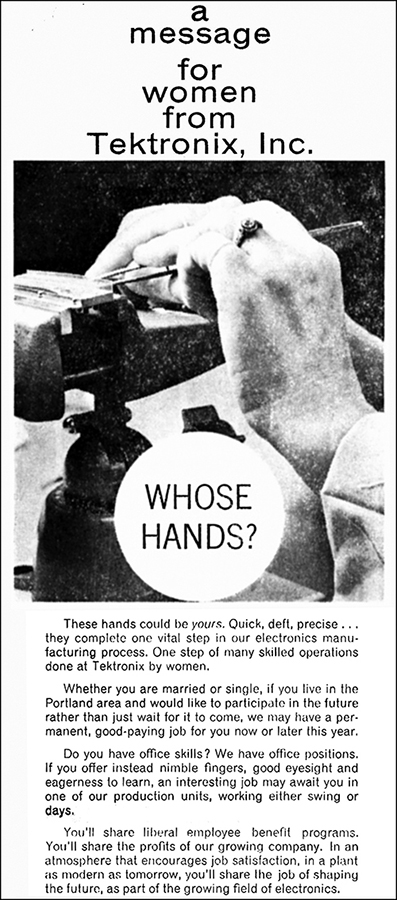
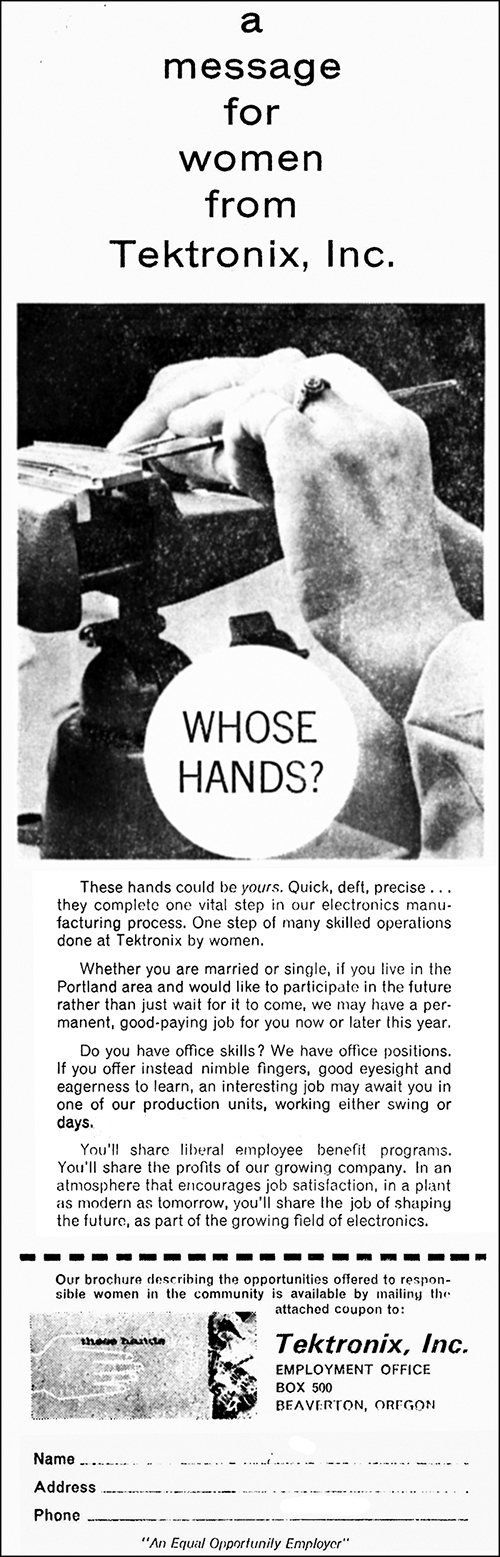
The March Advertisement of the Month comes from the January 18, 1962 Oregonian. This advertisement calls for women to apply for both office and production jobs at Tektronix. For the positions in manufacturing, women possessing “nimble fingers, good eyesight and eagerness to learn” could find an interesting job in a production unit.
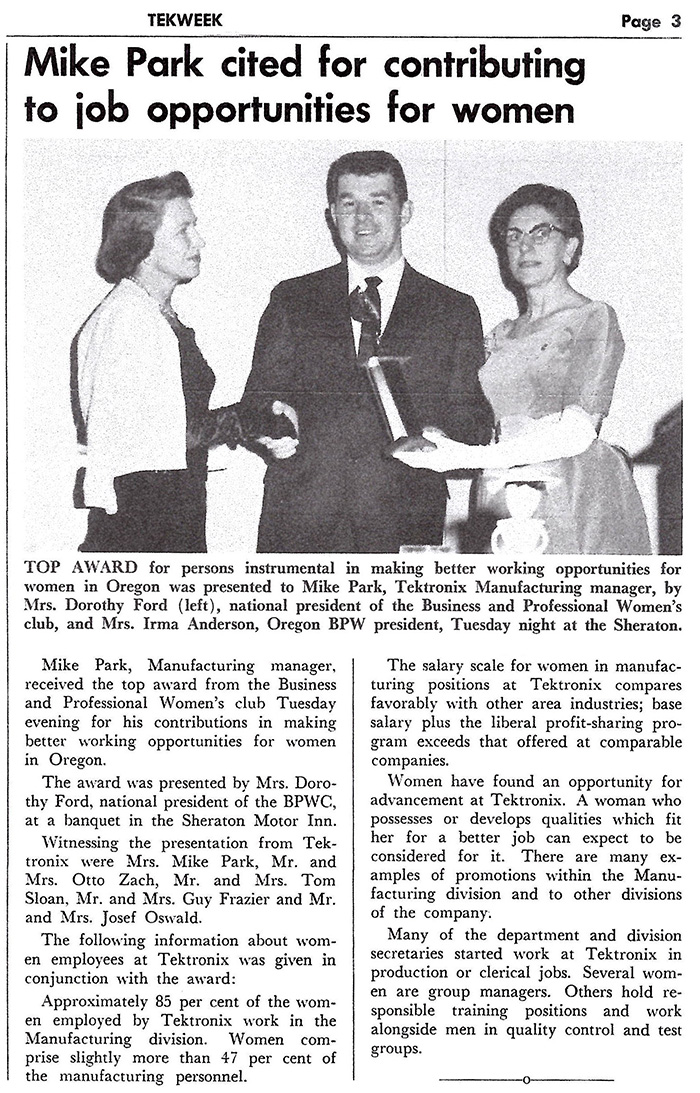
This was not new concept at Tektronix. A March 12, 1965 TekWeek article reported how Mike Park, Tektronix Manufacturing Manager, was recognized by the Business and Professional Women’s Club for his contributions in creating better working conditions for women in Oregon. At the time 85% of women employed at Tektronix worked in the Manufacturing Division and slightly more than 47% of all employees in that group were women.
Advertisements of the Month: Sept 2025 - Present.
 Sept 2025 AOM: Tektronix First Advertisement